
You probably notice when you walk into a room and people's heads turn — and you've spent a long time pretending you don't notice. The Leo pattern is the part of any room that becomes a center of gravity whether or not you wanted to.
It isn't vanity. It's a structural feature of the archetype. Other people can blend into a crowd; you can't, and you've spent your life either leaning into that or working around it. This page is for you if any of that lands.
The Leo archetype

Pop astrology gives you a Leo who's vain, attention-seeking, dramatic — the showboat of the zodiac. That description comes from people who confuse visible self-possession with vanity. The real Leo pattern is closer to a person whose default frequency is high enough that they can't easily disappear into the background, and who's been negotiating with that fact since childhood.
If you're Leo Sun, you've probably noticed this since elementary school. You walked into rooms and they noticed. You were the friend who got the joke and amplified it. You couldn't quite manage the casual presence that other kids seemed to have access to — your version of casual still registered as something. Some Leos lean into this and become performers, leaders, public-facing professionals; some Leos try to dim down and spend their twenties learning that the dimming doesn't really work and the inner light leaks out anyway.
Right now, the archetype is in a complicated position. Cultural permission to be visibly confident has become harder to claim — confidence reads as arrogance, charisma reads as manipulation, ambition reads as a personal flaw. The same traits that defined the Leo archetype for millennia now get suspiciously side-eyed. Many Leo Sun adults have spent years quietly toning themselves down to fit a culture that's increasingly uncomfortable with what they are. The cost shows up as a low-grade chronic dissatisfaction that's hard to name.
The Sun rules Leo, and this is unique. Every other sign has a planet ruling it; Leo gets the star at the center of the solar system. The symbolism isn't accidental: Leo's identity is the conscious self — the part of you that says "I am" and means it. Where Cancer's Moon governs what runs underneath your conscious mind, Leo's Sun governs what your conscious mind is. For most signs, the Sun sign is one of several layers; for Leo, the Sun sign and the personality are nearly the same thing, because the very planet that defines Sun-sign astrology is also the ruling planet. There's no separation between the layers.
In the natural zodiac, Leo rules the 5th house — creative expression, play, romance, children, the impulse to make something visible. The 5th house isn't about achievement; it's about display. Painting because the painting needs to exist. Performing because the performance needs to happen. Falling in love because the love is its own purpose. Many Leo lives orbit around this principle, sometimes successfully (the artist whose work is unmistakably their fingerprint) and sometimes in distorted form (the social media performance that's all display and no underlying art).
One more pattern worth saying directly: the "needing attention" stereotype flattens a more specific need. Leo doesn't need attention in the abstract. Leo needs to be seen — which is different. Attention is volume; being seen is recognition. A Leo who has been seen accurately by one trusted person needs much less external attention than a Leo who has spent their life being noticed but never actually understood. Many Leo addictions to visibility resolve once someone has truly seen them. The performance was filling a recognition-shaped hole.
This is Leo at the Sun-sign level — the conscious identity, the broad archetype. How it actually lands in your life depends on your Moon sign (your emotional operating system), your Rising sign (what people encounter first), and which house your Sun occupies. Two Leos born a week apart can live this pattern very differently.
Strengths

The Leo strengths cluster around a quality that modern culture has become squeamish about: visible self-possession. The willingness to take up space, claim credit, lead from the front, and be seen doing it.
- Default confidence — You walk into rooms expecting to belong there. Most people perform confidence; you operate from it. The difference shows up over years: performers exhaust themselves keeping up the act, while you renew yourself by being yourself. The energy budget is fundamentally different.
- Generosity at scale — When you have resources, you share them. Time, money, attention, social capital, opportunities — you don't hoard. Many of your friends can name specific moments where your generosity changed their trajectory, and you probably don't remember most of those moments because they didn't register as remarkable to you.
- Loyalty in visible form — Once you've decided someone is in your circle, you defend them publicly. You'll take the social cost of disagreeing with the room to protect a friend. Most signs do loyalty privately; you do it visibly, which makes it both more valuable and more risky to receive.
- Performance literacy — You understand how presence reads from outside. The instinct for when to enter a room, how to hold a moment, when to drop a punchline — this is real skill, not vanity. The world genuinely runs better when someone in the room knows how to use these moves.
- Creative output — You have the energy to make things. Most people have the desire and can't sustain the doing. Leo finishes the project, ships the work, sends the email, paints the painting. The output rate over decades is the cumulative gift of being a fire sign with fixed modality.
- Warmth — Your default temperature is warm. The hug, the laugh, the welcome, the encouragement — these are not performed; they're how you actually run. People feel better after spending time with you, and they often can't articulate why. The why is that you've been radiating warmth and they've been warmed.
Shadow
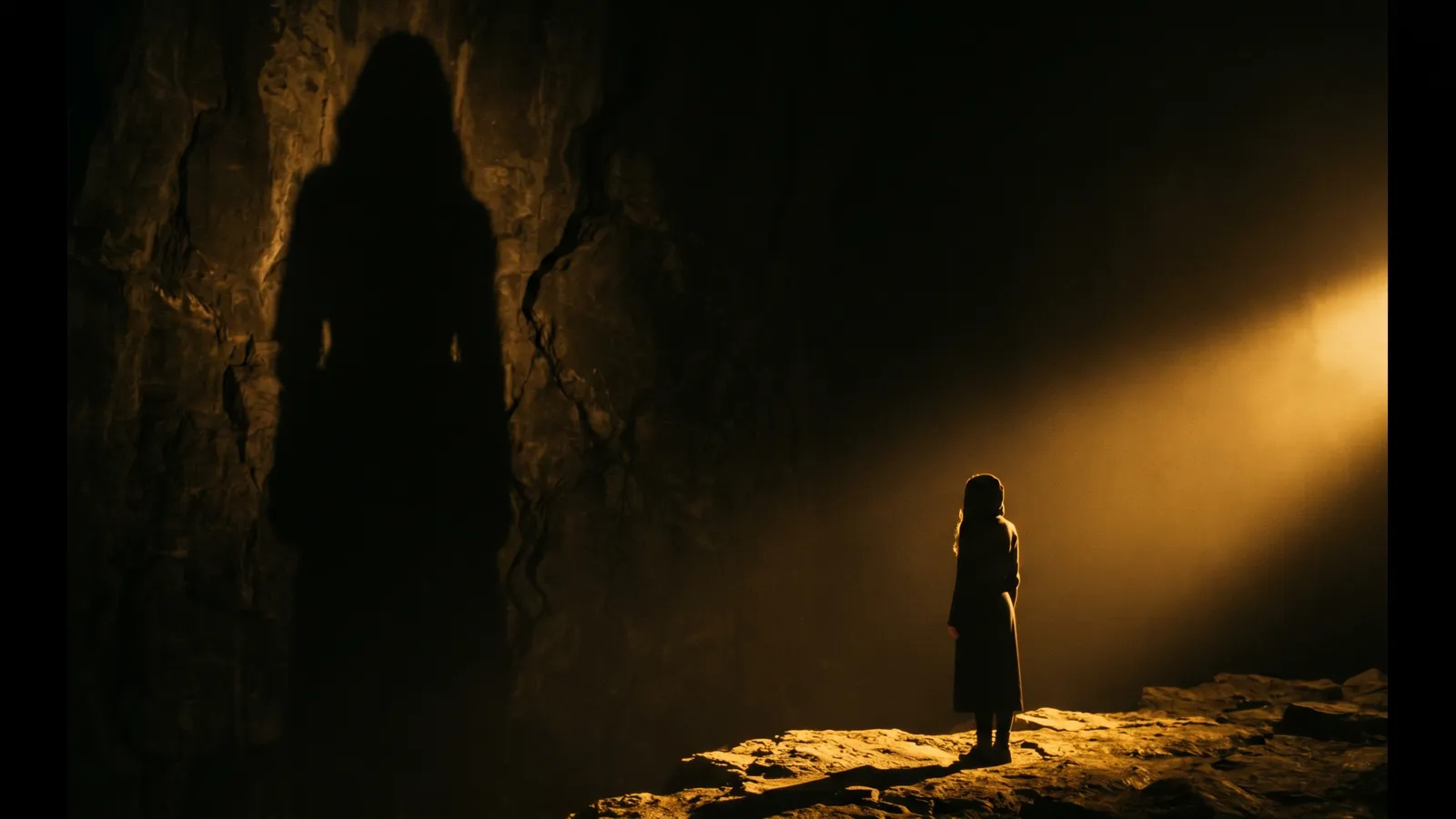
The Leo shadow isn't arrogance — that's the trivializing version. The actual shadows are more specific and worth taking seriously.
The first version is the recognition wound. When you're not seen — when the work goes uncredited, when the contribution is taken for granted, when the room treats you as background — the wound is disproportionate to the event. From inside, it feels existential. From outside, it can read as "they care too much about credit." The accurate read is that Leo's identity is more public-facing than most signs', and invisibility hurts more than other signs realize. The healthier version of this is learning to be seen by yourself when no one else is, which sounds like therapist language but turns out to be the actual work.
The second version is the performance trap. The same charisma that lights up a room can become a performance you can't turn off. The Leo who spends years being the entertaining one, the warm one, the inspiring one, eventually loses the ability to be quiet in their own life. The performance becomes the personality and the personality becomes a uniform that's hard to take off even in private. Many Leos at forty have a moment of realizing they don't actually know what they like when no one is watching, because the watching has been on so long.
The third version is the credit-hoarding problem. This is the one that maps closest to the arrogance stereotype but is more specific. Leo, having put visible effort into something, sometimes can't share the credit gracefully. The collaborator who helped is named less generously than they deserve. The partner who supported the work is mentioned as an afterthought. The team is praised but in a way that still centers you. Most Leos don't notice they're doing this; the version of the story they're telling feels accurate from inside. The fix is the small habit of saying others' names first, which costs nothing and changes how people remember you.
Ruler, element, modality

Leo is Sun + Fire + Fixed, which translates behaviorally into: your identity is the conscious self (Sun), it's expressive and warm (Fire), and it doesn't shift much across contexts (Fixed). The combination produces a person who's recognizably the same person at the dinner party, in the meeting, at the funeral, and at home — and whose energy enters a space before they do.
The Sun rules Leo and is the single most important body in any chart. It's where the conscious "I am" lives. For most signs, the Sun sign describes one layer of the personality; the Moon and Rising add depth, the planetary placements add specifics. For Leo, the Sun is both the personality AND the ruling planet, which makes the Sun-sign description more complete for Leo than for almost any other sign. When astrologers talk about Leos as if Leos are "more Leo than other signs are their signs," there's actual structural truth in that.
Fire as an element makes Leo's perception expressive rather than absorptive. You don't process the world by feeling it (Cancer) or thinking about it (Gemini); you process it by responding to it visibly. The laugh, the gesture, the immediate reaction — these are how Leo metabolizes experience. People who've spent time around Leo often describe them as "always on." The accurate read is that Leo's metabolism is faster than most signs', and the "always on" thing is the visible byproduct of that metabolic rate.
Fixed modality is the last piece. Fixed signs hold what cardinal signs initiate and mutable signs adapt. Leo is fixed fire — sustained expressive presence. Where Aries' cardinal fire ignites quickly and moves on, Leo's fixed fire keeps burning. The career that's still going at decade three. The relationship that's still warm at year twenty. The creative practice that's still producing at age seventy. The fixedness is what turns Leo's charisma from a young-person trait into a lifelong one.
A useful reframe of Leo's pattern: think of it as steady-state radiation. You're not performing presence; you're emitting it. The performance language captures the visible behavior but misses the underlying physics. Performing implies effort; you're not putting in effort, you're just running, and the running is what the world experiences as presence.
Leo as a woman

The social filter on Leo women has tightened in the last decade. Confidence in women — visible, unapologetic, room-claiming confidence — is increasingly coded as "narcissism" or "pick-me energy" or "trying too hard." A Leo woman often spends her teens and twenties absorbing this coding and adjusting downward. The dimming usually doesn't work; the inner brightness leaks out anyway, but now in a way that feels apologetic rather than owned.
The pattern that usually lands well long-term is the unapologetic version. The relationships that last are with partners who can stand next to her brightness without feeling diminished by it. The careers that fit are the ones where her warmth and visibility are assets — performance, leadership, the arts, teaching, the kind of work where being-seen is the point. The friendships that survive are with people who don't quietly resent her capacity.
A specific pattern: Leo women are often the friend whose generosity is genuinely lifelong and largely uncalculated. The birthday party hosted at her place. The opportunity passed along when she could have kept it. The introductions that helped people's careers. The cumulative effect of decades of Leo generosity is that her social network is dense, warm, and disproportionately loyal — but also, sometimes, full of people who took the generosity for granted because it never seemed scarce.
Leo as a man

The social filter on Leo men is gentler than on Leo women — masculine charisma still gets cultural permission — but with its own trap. The trap is becoming the version of yourself that other people respond to, rather than the version of yourself you actually are. The popular guy in the friend group, the charismatic boss, the leader who everyone defers to — these roles fit Leo men naturally and can quietly take over the actual identity underneath.
The recurring story: a Leo man in his forties realizes he doesn't know what he likes when he's alone. He's been performing competent confident warmth so long that the inside of the performance has worn thin. The Leos who have done the most interesting work — Obama, Carl Jung, James Baldwin, many others — almost always have a parallel life of solitude and introspection that's invisible from outside. That parallel life is the medicine. The Leo man who doesn't develop it tends to become a slightly tired version of himself by middle age, charismatic on the outside and quietly empty on the inside.
A specific pattern: Leo men who develop a creative practice that's done for its own sake — not for an audience, not for performance, not for income — usually keep the inner life alive. Music played at home that nobody else hears. Writing in a journal nobody will read. The painting that doesn't go on Instagram. The unpublic art is what feeds the public Leo.
In love & relationships

The Leo pattern in love is fast warmth, total visibility, and complete loyalty once committed. You don't half-love. The relationship gets the full radiance, which is both why partners feel uniquely chosen by you and why the relationships are exhausting if the partner can't handle the brightness.
In modern dating, this is a mixed fit with apps. The visibility helps — Leo profiles get matches — but the apps reward casual exploration, which isn't a mode you operate well in. You either want to date someone seriously or you don't want to bother. The "let's see how it goes" mode that's common on apps feels diminishing to your energy. Many Leos find their relationships through their existing social circles rather than the apps, simply because the friends-of-friends layer is more compatible with their commitment style.
Sex matters and matters visibly. Leo sex is performative in the best sense — fully present, fully expressive, not embarrassed by enthusiasm. The partner who can match the energy or is genuinely turned on by it has a great sexual relationship with you. The partner who's quieter or more reserved can find the energy difficult; they're not wrong, but the chemistry has a temperature mismatch that doesn't go away.
How Leo fights is loud and dramatic but usually not malicious. Voices rise, there's some theater, the actual issue gets named, and then within a day or two you're back to warm. You're not built for the silent treatment; the suppression goes against your operating system. Partners who can handle the volume usually find Leo fights manageable. Partners who experience all conflict as catastrophic struggle in Leo relationships because the volume is the air clearing, not the storm building.
Leaving, when it happens, is usually preceded by a phase where your warmth quietly cools. You don't go silent like Scorpio or withdraw like Cancer; you just stop radiating in their direction. Your light, which used to point at them, points somewhere else. Former partners often describe this as feeling like they got dimmed in your life — accurate read, and usually unrecoverable once the redirection has happened.
The long-term gift of the archetype, when partnered well, is a relationship that stays warm across decades. Leo marriages, when they work, don't have the cold patches that other long marriages develop. The same person you've loved for thirty years still gets the warm version of you, and they know they're getting it because the temperature is observable from outside the relationship. Many Leo marriages are publicly recognizable as warm in a way that other marriages aren't.
The compatibility grid further down this page shows Sun-sign pairings — who sparks naturally, who challenges you, who surprises. But real compatibility runs deeper: it lives in how your Venus speaks to their Mars, how your Moons negotiate needs, and whether your 7th house ruler finds anything to work with in their chart. The Sun-sign headline gets you started; the full synastry tells you whether it lasts.
In career & work

Leo thrives in work that uses visibility as a tool. Performance, leadership, teaching, public speaking, brand building, sales, the arts, frontline customer-facing roles where charisma is the deliverable. Also: management positions where a team needs visible warmth to function, founder roles where charisma drives investment and hiring, journalism where authorship is the point.
Leo wilts in environments designed to suppress individual presence. Highly bureaucratic organizations where credit is structurally diffused, back-office roles where invisibility is rewarded, creative industries that have decided author-personality is unfashionable. You can survive these for stretches but the fit is wrong; the energy you're spending on showing up isn't getting returned in the form of recognition that other signs don't even need.
The Leo career arc usually involves becoming the visible face of something. The boss everyone knows by first name. The artist whose work is recognizably theirs. The teacher students still talk about decades later. The professional whose reputation precedes them by a city block. This shape doesn't have to be famous-famous; it just needs to be seen in the relevant context. A Leo dentist whose patients drive an hour to keep seeing them is operating in the same archetype as a Leo movie star, scaled differently.
In a peer setting, Leo is often the unintentional spokesperson — the one whose phrasing gets picked up, whose enthusiasm sets the meeting tone, whose example others quietly follow. This role is real but usually unbillable. The career advice worth taking: find the organizations that recognize and compensate for the spokesperson role; don't stay long in companies that extract your visibility without paying for it.
The biggest Leo blind spot in work is mistaking charisma for substance. You can carry a project on charm for longer than other signs can. The risk is that you sometimes carry it on charm even when you should have been carrying it on actual expertise. The Leo who builds both — the radiance plus genuine depth in a craft — is often the most successful version of the archetype. The Leo who never develops the depth tends to peak earlier than they should, around the moment when the audience starts asking for substance and the substance was never developed.
In friendship

Leo friendship is built for warm, visible, long-running connection. You're often the person who makes the friend group an actual group — the one who organizes, who hosts, who keeps the energy alive. Other people in the group sometimes don't realize this until you take a year off, and then everything quietly stops happening.
What you bring: presence and generosity. Your friends get the warm version of you consistently. You don't have many social masks; the version they meet is the version you actually are. You also extend more — more invitations, more time, more opportunities — than they extend back. Many Leos have the experience of being the most generous member of their friend group and not quite tracking that until they're tired.
The hazard is one-sidedness disguised as graciousness. You give more; you don't really notice that you're giving more; the friend group adapts to the pattern; you wake up at forty quietly resentful of how unreciprocal everything has been. The fix requires either accepting the asymmetry deliberately (it's fine, you're the one with more to give) or rebalancing through small visible adjustments (less hosting, less arranging, letting others step up). The unfix — silent resentment — costs friendships that didn't have to end.
A specific pattern: Leo is often the friend whose approval feels meaningful. People want to be seen by you in a way they don't want to be seen by other friends. You probably underestimate how much your praise lands and how much your withdrawal of warmth registers. The Leo who learns to use their warmth consciously — not as performance but as a resource you're choosing how to deploy — has more functional friendships than the one who just radiates indiscriminately.
Common myths about Leo

Myth: Leos are arrogant. Reality: Leos have default confidence, which reads as arrogance to people who lack it. The distinction matters. Arrogance is unjustified superiority claimed at others' expense; default confidence is operating from a stable inner sense of being okay. Most Leos aren't comparing themselves to other people; they're just running from a different baseline. The arrogance read often says more about the reader's discomfort with confidence than about the Leo.
Myth: Leos need constant attention. Reality: Leos need accurate recognition. The trope frames you as a child fishing for compliments; what's actually happening is more specific. Leo's identity is constructed in relation to being seen, so being chronically misseen — or invisible to the people who should be paying attention — hurts more than it should. A Leo who has one trusted witness usually needs almost no outside attention. The hunger is for recognition, not volume.
Myth: Leos are show-offs. Reality: Leos are visible. The two look similar from outside and feel completely different from inside. Showing off implies inauthentic performance for status. Visibility is just the natural byproduct of running with the warmth and presence Leo runs with. You're not putting it on; you couldn't take it off without significant cost. The myth comes from people who assume that anything that looks like performance must be performance, when sometimes it's just the unfiltered version of someone.
Myth: Leos are bad at being alone. Reality: Leos often think they're bad at being alone and then discover, when they actually do it, that they're quite good at it. The aversion is cultural — Leo cultural permission has always been to be social, so solitude has felt forbidden. The Leos who claim solitude as a real practice usually find themselves richer in their later years than the Leos who avoided it.
Are you really a Leo?

Your Sun sign is your conscious identity. Your Rising is the door — what strangers experience in the first thirty seconds. They can be very different.
If you've been told you don't seem like a Leo, you might be a Leo Sun with a quieter Rising — Virgo, Capricorn, Cancer — and people are meeting the more contained version of you first. Your inner engine is running on Sun and fixed fire; the door just has the volume turned down.
The only way to know your full pattern is to look at the complete chart — Sun, Moon, Rising, and the aspects between them. That's what a natal chart reading does: it takes the broad archetype on this page and makes it specific to your exact birth sky.